

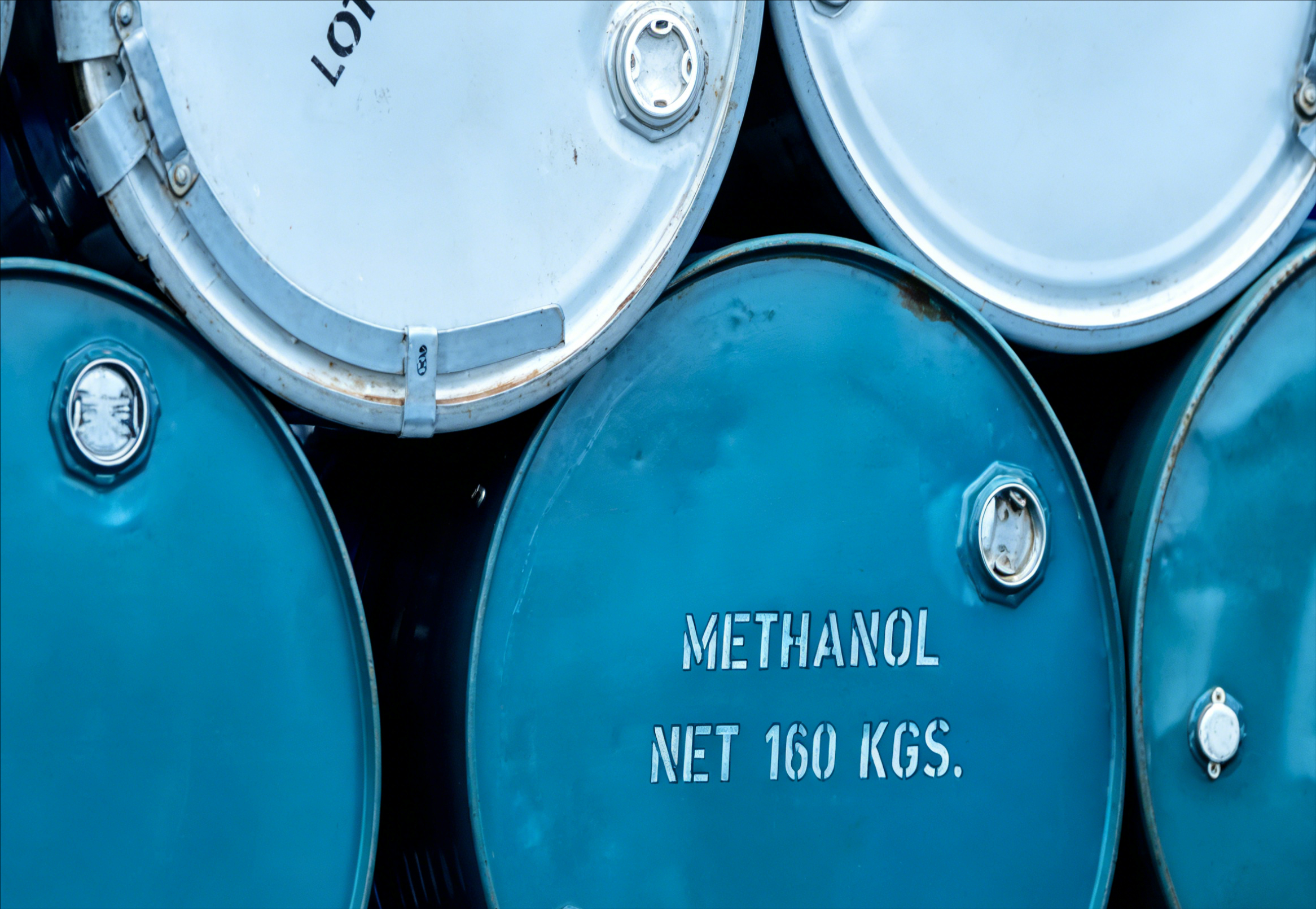
In the short term, the methanol market will remain in a “weak reality, strong expectations” pattern. Price upside is constrained by high inventories, making wide-range fluctuations highly probable.
Recent turmoil in Iran has sparked investor concerns over potential crude oil supply disruptions, pushing international crude prices to their highest level since early December 2025. Since January 2026, methanol futures prices have gradually stabilized and rebounded, with market drivers shifting from U.S. geopolitical tensions to escalating Middle East conflicts. However, domestic methanol port inventories remain persistently high, and the 2605 contract has yet to break free from its “weak reality, strong expectations” operational pattern.
Limited New Maintenance Facilities
Regarding domestic methanol production processes, coal and natural gas serve as the primary feedstocks. Statistics indicate that by December 2025, national methanol output reached 101.8 million tons, marking a 9.9% year-on-year increase. As of January 8, 2026, the operating rate of mainstream coal-based methanol plants stood at 103.6%, up 1.1 percentage points month-on-month and 0.38 percentage points year-on-year. while the operating rate for natural gas-based methanol plants stood at 48.4%, down 2.5 percentage points month-on-month and 3.9 percentage points year-on-year.
From a supply-side perspective, coal-based methanol producers currently show no significant risk of inventory buildup, and with few planned maintenance shutdowns for new facilities, overall production is likely to remain at elevated levels. Future focus should be on the restart progress of natural gas-based methanol plants.
Data from the National Bureau of Statistics shows that China's methanol imports in November 2025 reached 1.4176 million tons. Although this represents a month-on-month decrease compared to October 2025, it marks a significant year-on-year increase. Market estimates project December 2025 methanol imports to range between 1.7 million and 1.8 million tons, continuing the upward trend year-on-year. From January to November 2025, cumulative domestic methanol imports reached 12.7 million tons, up 2.6% year-on-year. Statistics also indicate that China plans to add 5.6 million tons of new methanol capacity in 2026. After excluding integrated downstream facilities, the actual capacity expected to come online is estimated at 3.05 million tons.
Basis Slightly Strengthens
Global methanol production capacity exhibits distinct regional characteristics, primarily concentrated in areas with abundant feedstock and low production costs. Overseas capacity centers on the Middle East, particularly Iran—a region that has become a major global methanol production hub due to its abundant natural gas resources.
China's methanol supply heavily relies on imports from the Middle East, which accounts for over 80% of its import sources. Iran stands as one of China's core methanol import origins. Statistics show that from January to November 2025, China imported (including transshipments) 8.6075 million tons of methanol from Iran. Notably, Iran's current methanol production remains at an absolute low, with eight production lines still idled, involving an annual capacity of 13.85 million tons. Further declines in output cannot be ruled out in the future.
As of the week ending January 8, domestic methanol port inventories climbed to 1.5372 million tons. The market anticipates that port inventories will remain elevated throughout January, exerting strong downward pressure on near-month contract prices. Meanwhile, Iran's methanol loading volumes in January are projected to remain low, with a significant month-on-month decline anticipated. Latest data indicates mainland methanol producers' inventory levels hover around 447,700 metric tons. Current manufacturer quotations show slight softening, driven partly by port-to-mainland cargo diversion and downstream factories' low-price, essential-need procurement. Key focus moving forward includes the pace of inventory drawdown at mainland methanol plants before the Spring Festival and the emergence of a port inventory inflection point.
Downstream Olefin Plants Expected to Restart
In late January, domestic methanol-to-olefins (MTO) plants are expected to gradually resume operations, though traditional downstream demand remains weak. As of January 8th, methanol plants in Northwest China had secured orders totaling 94,200 tons, up 15,700 tons month-on-month and 54,200 tons year-on-year. The backlog of orders for sampled methanol enterprises stood at 237,500 tons, up 29,500 tons from the previous period but down 11,600 tons year-on-year. Regarding specific downstream facility operations: - Olefin operating rates reached 89.28%, up 0.62 percentage points month-on-month and 3.6 percentage points year-on-year; Methane chloride operating rates stood at 75.8%, down 5.8 percentage points month-on-month but up 0.8 percentage points year-on-year; acetic acid operating rates were 76.9%, down 2.7 percentage points month-on-month and 5.7 percentage points year-on-year; formaldehyde operating rates reached 34%, down 4.3 percentage points month-on-month and 5.4 percentage points year-on-year.
As an integrated internet platform providing benchmark prices, on January 15th, the benchmark price of methanol according to SunSirs was 2269.17 RMB/ton, an increase of 2.79% compared to the beginning of the month (2207.50 RMB/ton).
Application of SunSirs Benchmark Pricing:
Traders can price spot and contract transactions based on the pricing principle of agreed markup and pricing formula (Transaction price=SunSirs price + Markup).
If you have any inquiries or purchasing needs, please feel free to contact SunSirs with support@sunsirs.com
- 2026-01-12 SunSirs: Рынок метанола переживает восстановление и колебания цен
- 2025-12-29 SunSirs: Мировой рынок метанола вступает в новый этап развития
- 2025-12-25 SunSirs: региональные различия в цене обусловливают изменения в грузовых потоках; в будущем поставки метанола в Хубэй станут более диверсифицированными
- 2025-12-23 SunSirs: Перспективы рынка метанола на вторую половину 2025 года
- 2025-12-19 SunSirs: Нефтехимическая промышленность продолжит сталкиваться с проблемами в ближайшие пять лет


