

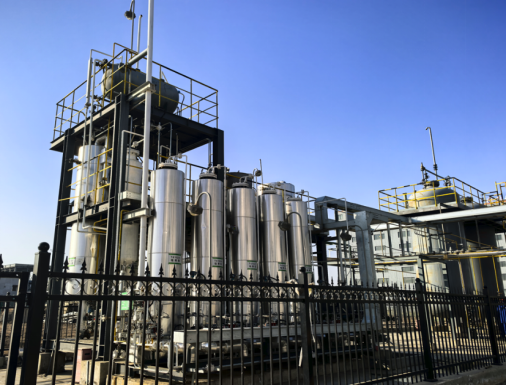
Introduction: Methanol is a colorless, clear liquid whose vapor forms an explosive mixture with air, burning with a blue flame. Methanol is miscible with water, ethanol, benzene, ketones, and other organic solvents. Its vapor forms an explosive mixture with air and can cause combustion and explosion when exposed to open flames or high heat. The methanol monitored by SunSirs is of premium grade.
In 2025, the domestic methanol market was affected by increased supply, import impacts, and weak demand, leading to a significant supply-demand imbalance and a year-long downward trend in prices. The acceleration of green methanol development under global "dual carbon" goals introduced variables into the long-term development of the industry. SunSirs analyzes the 2025 market from the perspectives of price, supply and demand, policies, and external environment, and forecasts the trends for 2026.
I. Key trends in the methanol market in 2025: Prices fluctuated downwards, with a weak market prevailing throughout the year
1. In 2025, the methanol market remained weak, with prices trending downwards, and short-term fluctuations unlikely to reverse the overall downward trend:
Overall trend: Volatile downward trend, with significant fluctuations throughout the year
According to data monitored by SunSirs' analysis system, the price of methanol in 2025 followed a trajectory of "initial decline, followed by fluctuations, and then a further decline to a bottom." The price reached its annual high in mid-March (driven by pre-holiday stocking), and hit its lowest points in early June and late November (influenced by the off-season and peak import inventory levels, respectively). The average spot price at the end of the year was more than 15% lower than at the beginning of the year, reaching a three-year low, and industry profitability remained under continuous pressure.
2. Volatility Logic: Short-term fluctuations were driven by disruptive factors, while long-term trends were dominated by supply and demand
Throughout the year, prices experienced several short-term rebounds, driven by temporary factors such as the Iran-Israel conflict, adjustments to coal supply policies, and seasonal stockpiling. However, due to the lack of sustained momentum and the underlying imbalance between supply and demand, prices quickly fell back after each rebound, failing to establish a trend reversal.
II. Analysis of Core Driving Factors: Supply-demand imbalance is the core factor, while policies and international situations serve as auxiliary variables.
1. Supply and demand dynamics: Supply was expanding on two fronts, while demand lacked sufficient support.
The supply-demand imbalance was at the heart of the market's weakness, with a stark contrast between the increase in supply (both domestic production and imports) and the weak demand (due to traditional sectors being sluggish and emerging sectors not yet fully developed).
Supply side: High production capacity and high imports led to a severely oversupplied market.
In 2025, China's total methanol production capacity reached 108.045 million tons per year (a year-on-year increase of 5%), with new capacity concentrated in the coal-to-methanol sector in northwestern China. The average operating rate of coal-based methanol plants was 80%, while that of natural gas-based plants wa 49%, resulting in an overall industry operating rate exceeding 78%, ensuring sufficient supply.
Imports reached 14.28 million tons (a year-on-year increase of 5.9%, a new historical high). In the second half of the year, a large influx of overseas supplies led to port inventories accumulating to a peak of 1.674 million tons in November, strongly suppressing spot prices.
Demand side: Traditional sectors were weak, while emerging sectors were still in their development phase.
The core downstream MTO (methanol-to-olefins) industry was affected by the inverted profit margins of polyolefins, leading to long-term losses and low operating rates for externally sourced facilities; demand growth for traditional downstream products such as formaldehyde and acetic acid has slowed, resulting in reduced production at small and medium-sized enterprises and weakened methanol consumption capacity.
Emerging demands for methanol fuel and commercial vehicles were gradually being released, but their scale was small and constrained by standards and supporting infrastructure, making them unable to compensate for the shortfall in traditional demand in the short term.
2. Policies and External Environment: Green transition accelerates, with moderate disruptions from the international situation.
Policy Environment: The dual carbon goals were driving transformation, putting pressure on traditional industries.
Domestic "dual carbon" goals wee driving the development of green methanol, with many regions introducing supportive policies. However, traditional coal-based and natural gas-based methanol still account for over 95% of production. Coal supply guarantees and environmental production restrictions are affecting the cost and supply stability of traditional methanol, exacerbating profit pressures.
International situation: Global supply was ample, with short-term geopolitical disruptions.
Global methanol supply was ample, and low international prices were weighing on domestic prices. The conflict between Israel and Iran, along with plant maintenance in Iran, have caused short-term disruptions to import volumes, but these events have not altered the overall situation, and their impact is limited and temporary.
III. Market Outlook for 2026: Short-term cyclical rebound expected, long-term structural transformation is promising.
1. Short term (early 2026): A combination of shrinking imports and inventory reduction may lead to a temporary price rebound.
In early 2026, winter maintenance in Iran led to a contraction in imports, and coupled with the resumption of downstream operations after the Spring Festival, port inventory pressure eased, and the supply-demand balance improved marginally, potentially leading to a temporary price rebound. However, the extent of the rebound will be limited by the recovery of MTO (methanol-to-olefins) profits and the strength of the recovery in traditional demand, resulting in continued low-level fluctuations.
2. Long-term: Green methanol is rapidly emerging, and the industry landscape is gradually being reshaped.
In the long term, while planned green methanol production capacity is increasing, the pace of commissioning is slowing down, and traditional methanol will still dominate in the next 2-3 years. With technological advancements and cost reductions, the potential for green methanol applications in shipping and new energy vehicles will be unleashed. Coupled with the impetus from the EU's Carbon Border Adjustment Mechanism (CBAM) policy, green methanol will become a core sector. High-cost traditional facilities will be phased out more quickly, leading to increased industry concentration and an evolution towards a "green, high-end, and concentrated" market structure.
Market Outlook
In 2025, the core contradiction in the methanol market was the supply-demand imbalance, leading to volatile and downward-trending prices. In 2026, the short-term situation may improve due to reduced imports and inventory reduction, but the industry will still be in a transitional period between the phasing out of traditional capacity and the development of green capacity. In the future, breakthroughs and expanded applications of green methanol technology, along with the strength of the recovery in traditional demand, will determine the evolution of the market structure, leading the industry towards a new pattern of green transformation.
If you have any inquiries or purchasing needs, please feel free to contact SunSirs with support@sunsirs.com
- 2026-01-23
- 2026-01-22
- 2026-01-21
- 2026-01-15
- 2026-01-12 SunSirs: 메탄올 시장은 회복과 가격 변동을 경험하고 있었다


