

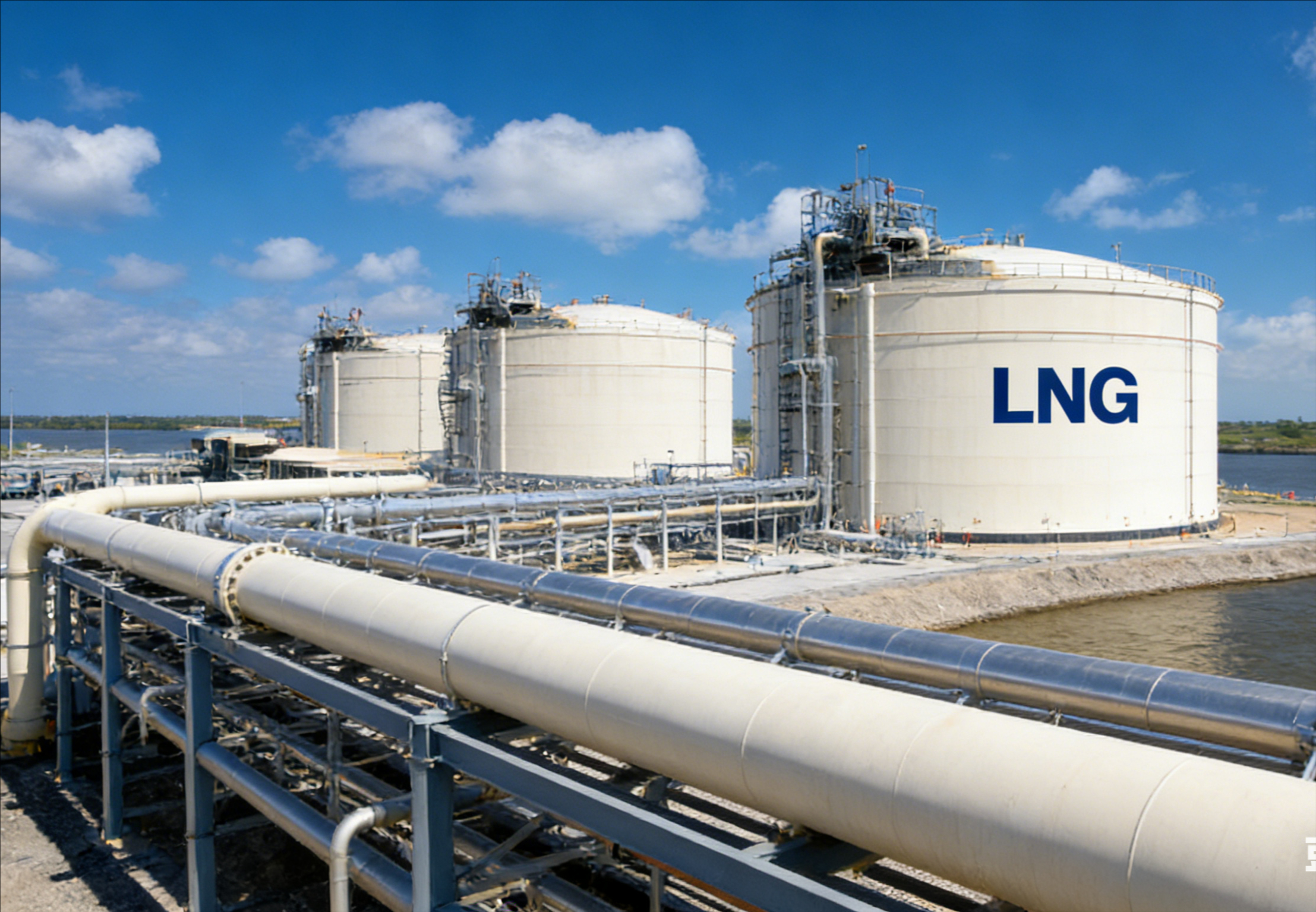
According to China Energy News, by 2025, the LNG (liquefied natural gas) market will bid farewell to its era of extreme volatility, entering a “new normal” characterized by balanced supply and stable prices. This shift is driven by multiple factors: steady growth in domestic gas production, a sustained reduction in import dependency, and overall subdued demand.
Data indicates that the average annual LNG price in 2025 hovered around CNY4,260 per ton, marking a year-on-year decline of approximately 6%. Price fluctuations reached their lowest level in nearly a decade. This shift not only signifies the market's transition from supply-driven dynamics to balanced supply and demand but also reflects the profound effectiveness of domestic energy structure optimization and policies aimed at ensuring stable supply and prices.
Flattening Price Curve
Historically, the LNG market followed a predictable pattern: prices surged during heating seasons and retreated during off-peak periods, often experiencing rollercoaster-like fluctuations. During the 2017 heating season, the monthly average price of LNG soared by as much as 59.53% month-on-month. From 2021 to 2022, the price range remained above CNY4,300 per ton for two consecutive years.
By 2025, however, the price fluctuation range narrowed sharply to 13%, with the peak price reaching only CNY4,700.46 per ton. This stands in stark contrast to previous years' fluctuations, which routinely exceeded several dozen or even over 100 percent, marking the second-lowest value in the past decade.
Against this backdrop, seasonal patterns appear to have quietly receded.
Market analysis indicates that in the first half of the year, LNG cost support and weak recovery demand balanced each other out, limiting price upside potential. In the second half, despite traditional positive factors like maintenance at northern liquefaction plants and the onset of the heating season, prices failed to surge significantly amid ample overall supply and sluggish demand from industrial sectors. The price spikes triggered by “gas shortage” concerns in previous years are unlikely to recur.
Domestic LNG Takes the Lead
The confidence in stable market operations stems from profound adjustments in the supply structure.
By 2025, China's domestic natural gas production capacity will steadily climb, surpassing 260 billion cubic meters in output—marking nine consecutive years of annual increases exceeding 10 billion cubic meters. The rise of domestically produced gas provides a solid foundation for market stability.
Unconventional oil and gas have been particularly prominent. China National Petroleum Corporation's coalbed methane division achieved a daily output of 10.0222 million cubic meters from deep coalbeds, surpassing the 10-million-cubic-meter threshold for the first time and sustaining growth throughout the week. This breakthrough not only set a new historical record but also signifies a new milestone in China's unconventional natural gas development.
The growth in domestic production has effectively reduced reliance on external resources, adding greater certainty to the market supply side. The domestic LNG market has shown a clear trend of “domestic production advancing while imports retreating,” with capacity utilization rates maintained at a high level, becoming a stable cornerstone for ensuring supply.
The warm winter even allowed LNG plants to release capacity during the winter months, when production is typically curtailed in previous years. Production in December last year is expected to hit a five-year high.
Meanwhile, the role of imported LNG is undergoing a rational reassessment. Influenced by increased domestic supply, elevated international spot prices, and tariff policies, annual imports are projected to decline significantly by 13.75% year-on-year to 66.11 million tons.
This reflects reduced market dependence on imported resources under the policy orientation of “ensuring supply and stabilizing prices,” with procurement becoming more cautious and flexible. A multi-anchor supply system is gradually taking shape, with domestically produced gas and pipeline gas serving as the “ballast” and imported LNG providing flexible supplementation, thereby enhancing the buffer capacity for domestic energy security.
New Supply-Demand Equilibrium
Despite solid support from the supply side, persistent weakness on the demand side is capping the market's upside potential.
A warm winter directly weakened peak-shaving and inventory replenishment demand in the urban gas sector, while ample pipeline gas supply created substitution effects for LNG. Overall lackluster demand remains the key constraint preventing market breakthroughs.
Looking ahead, multiple industry insiders anticipate that by 2027, fundamentals will gradually ease as international supply gradually increases.
For China's domestic LNG market, the natural gas industry will remain in a rapid development phase over the next five years. Overall LNG demand is projected to grow steadily, with its share in the consumption structure stabilizing. Demand growth across China's LNG sectors is expected to rank as follows: transportation, industrial, power plants, and city gas.
Under the influence of multiple reshaping forces, the market is seeking and establishing a new equilibrium point.
As an integrated internet platform providing benchmark prices, on January 22nd, the benchmark price of liquefied natural gas (LNG) according to 100ppi.com was 3522.00 RMB/ton, an increase of 6.66% compared to the beginning of the month (3302.00 RMB/ton).
Application of SunSirs Benchmark Pricing:
Traders can price spot and contract transactions based on the pricing principle of agreed markup and pricing formula (Transaction price=SunSirs price + Markup).
If you have any inquiries or purchasing needs, please feel free to contact SunSirs with support@sunsirs.com


