

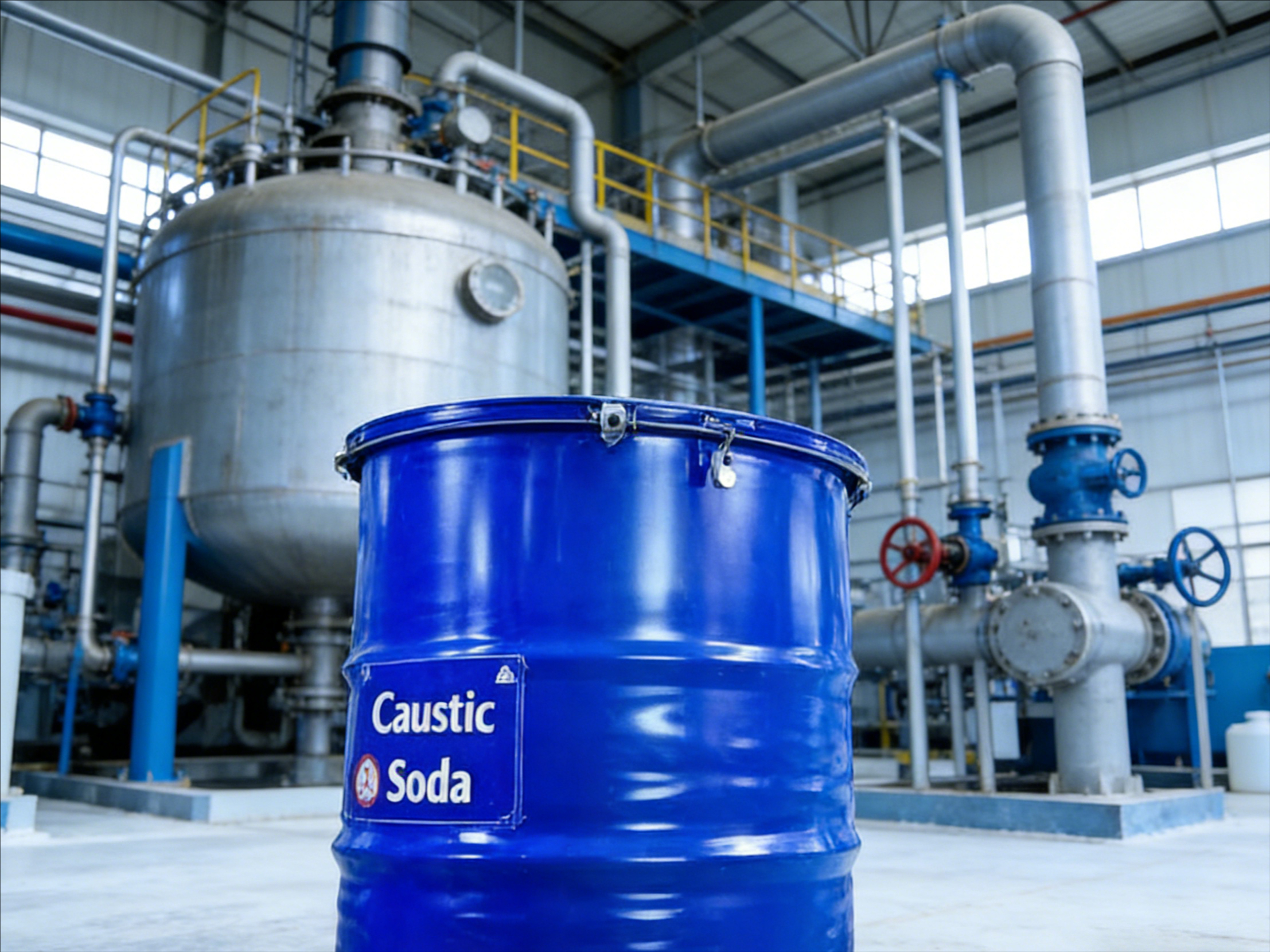
By 2025, China's caustic soda production capacity will increase by 1.61 million tons, with 200,000 tons of capacity phased out, resulting in a total capacity of 51.51 million tons. Three new production enterprises will be added while one exits the market, bringing the total number of caustic soda producers to 174. These enterprises are distributed across provinces, autonomous regions, and municipalities directly under the central government, excluding Beijing Municipality, Hainan Province, and the Tibet Autonomous Region.
In recent years, China's caustic soda production capacity has undergone distinct developmental phases:
I. Rapid Growth Phase: Prior to 2007 marked the peak period for China's caustic soda capacity expansion. Driven by sustained economic growth, the annual average growth rate exceeded 20%.
II. Stable Development Phase: The economic crisis severely impacted global and domestic economic development. The growth pace of caustic soda capacity, closely tied to the national economy, gradually shifted from rapid expansion to a slower trend. From 2008 to 2013, the growth rate stabilized around 10%.
3. Declining Growth Phase: Without profit incentives, new capacity additions and expansions became more rational. Additionally, market forces led to the survival of the fittest, and outdated capacity gradually exited in accordance with policy requirements. Net growth in caustic soda capacity declined rapidly, with negative growth first occurring in 2015.
IV. Relatively Stable Phase: Starting from the third quarter of 2016, China's caustic soda market operated at relatively high levels, with improved corporate profitability. Previously delayed planned new capacity came online. Although some caustic soda capacity continued to exit, overall capacity saw modest growth. From 2021 to 2022, affected by the COVID-19 pandemic, the progress of China's caustic soda project construction slowed, resulting in limited new capacity additions during those years. From 2023 to 2025, China's net increase in caustic soda capacity is expected to remain at conventional levels.
Overall, in recent years, guided by the National Development and Reform Commission's “Guidance Catalogue for Industrial Structure Adjustment (2024 Edition)” and relevant local policies, new caustic soda capacity additions in China have primarily focused on projects utilizing waste salt for comprehensive utilization. Capacity exits have mainly targeted long-idle, outdated caustic soda facilities and enterprises located outside chemical industrial parks.
If you have any questions, please feel free to contact SunSirs with support@SunSirs.com
- 2026-01-20
- 2026-01-07 SunSirs : Caustic Soda Market Review for 2025 and Outlook for 2026 에 대한 리뷰 보기
- 2026-01-04 SunSirs: 2025 년 1 월 ~ 11 월 중국 가수성 소다 수입 및 수출 데이터 분석
- 2025-12-23 SunSirs: 중국의 원염 시장은 11 월에 전반적으로 안정적으로 운영되고 있습니다.
- 2025-12-23 SunSirs: 12 월 22 일, 소다 가격 안정


