

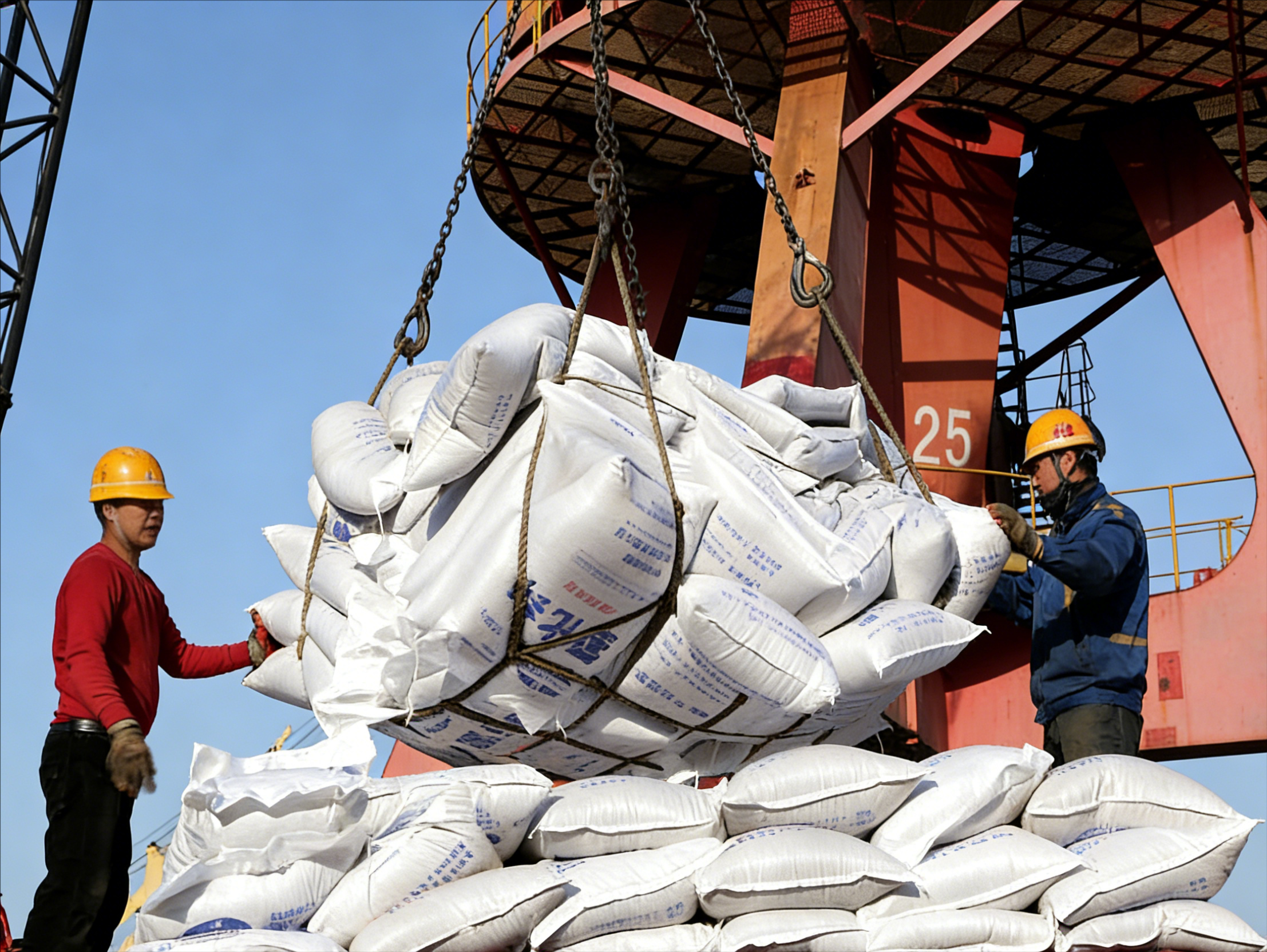
In 2025, China's potassium chloride port inventories showed a significant characteristic of consistently low levels, a trend that persisted throughout the year. In September 2025, port inventories even dropped to less than 1.7 million tons, a level significantly lower than at the beginning of the year and a new low compared to the same period in recent years.
At the beginning of 2025, potassium chloride port inventories were still at approximately 3 million tons. However, as time progressed, inventories continuously declined, showing a clear downward trend. Although China successfully signed a new annual import contract in June, aiming to alleviate market supply pressure by increasing imports, the actual situation did not unfold as expected. In July, the actual import volume of potassium chloride was only 532,800 tons, a figure far below market expectations and a new low for monthly imports, further exacerbating market supply tensions and driving up market prices. For example, from July 7th to 16th, 2025, the price of 62% white potassium chloride rapidly climbed to a high of 3550-3560 RMB/ton, and the price of domestically produced potassium chloride also followed suit, rising to 3200-3400 RMB/ton. The severe imbalance between market supply and demand made it difficult for potash fertilizer prices to fall significantly in the short term, placing considerable cost pressure on downstream users.
The reasons for the continuously low inventory levels are multifaceted: Firstly, the tense international shipping situation, coupled with delays in the fulfillment of large contracts, extended the transportation cycle of imported potash fertilizer and resulted in uneven arrival schedules. During some critical periods, the arrival volume was far from sufficient to meet market demand, making it difficult for port inventories to accumulate effectively, resulting in a shortage. Secondly, there was a significant discrepancy between market demand and the timing of cargo arrivals. Agricultural fertilizers have strict seasonality, with clear requirements for the quantity and timing of potassium chloride demand in different seasons. However, the import rhythm failed to effectively coordinate with the agricultural fertilizer cycle, and port inventories did not rebound as expected, making it difficult to fill the market supply gap, thus leading to continuously low inventory levels. Facing this situation, the government actively played a regulatory role, implementing "supply guarantee and price stabilization" policies, releasing national reserves, and guiding enterprises to rationally arrange production and supply to ensure market stability. With market dynamics adjusting, by October, port inventory levels began to show positive changes, gradually increasing, and new supplies arrived at ports, bringing new vitality to the market. At the same time, the determination of the 2026 international potash fertilizer contract price also provided some supply support for the domestic market in the later period.
Inventory Change Forecast Analysis
By the end of 2025, port inventories of potassium chloride were around 2.4 million tons. Although still lower than the beginning of the year, it showed a trend of stabilization and recovery. This data also served as the inventory baseline for the beginning of 2026. Regarding port inventories in 2026, the large contract (2026) has been signed in advance, and new supplies may arrive before the Spring Festival. In the first half of the year, driven by the demand for fertilizers during spring planting, port inventories may initially decrease before stabilizing. In the second half of the year, as the fulfillment of the potash fertilizer contract nears completion, inventories may gradually recover, but due to the combined impact of import volume and demand growth, the increase in inventory may be limited.
If you have any inquiries or purchasing needs, please feel free to contact SunSirs with support@sunsirs.com
- 2026-01-08 SunSirs : 2025 - 2026 년 염화칼륨 시장의 공급 및 수요 역동성 분석
- 2026-01-06 SunSirs : 새해 연휴 이후 감자 공급 개선 및 가격 안정
- 2025-12-17 SunSirs: 칼륨 염화물 공급 강화 및 가격 상승; 칼륨 황산염 직면 비용 반전; 칼륨 비료 가격 확고 유지
- 2025-12-12 SunSirs: 곡물 가격 상승, 복합 비료 가격은 중장기적으로 높은 상태로 유지
- 2025-12-10 SunSirs: 수요가 증가함에 따라 염화 칼륨 가격이 높은 수준으로 돌아 왔습니다.


